
Japanese has what’s called a pitch accent. This is the intonation of Japanese language. If your goal is to sound like a native Japanese speaker, it’s important to have a grasp of it, since incorrect pitch accent will make you sound foreign.
Pitch accent also differentiates words! For the word はし(hashi), pitch accent can change it from a bridge to a pair of chopsticks, so be careful!
Here are some words that sound the same, but with different pitch accents.
11 different examples of pitch accent
あめ 雨 (rain) vs 飴(candy)
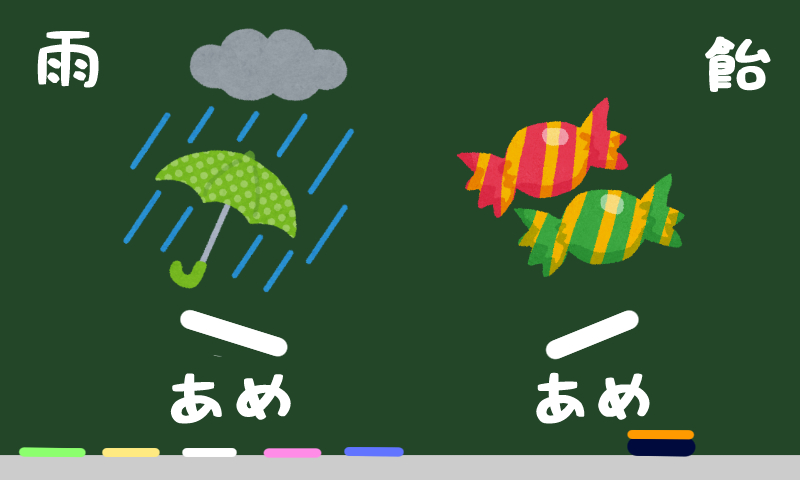
あめ has two meanings. One is rain and another is candy. Even if your pitch accent is wrong, people will understand you based on context, but it's better to know the difference of accent if you want to sound like a native speaker.
When you pronounce 雨(rain), the word starts high and ends in a low pitch. On the other hand, the end of 飴(candy) starts low and ends in a high pitch.
Sentence
雨が降ってきた。
ame(-\) ga futte kita
It has started to rain.
飴を食べたい。
ame(-/) wo tabetai
I want to eat a candy.
あく 悪(evil) vs 開く(to open)
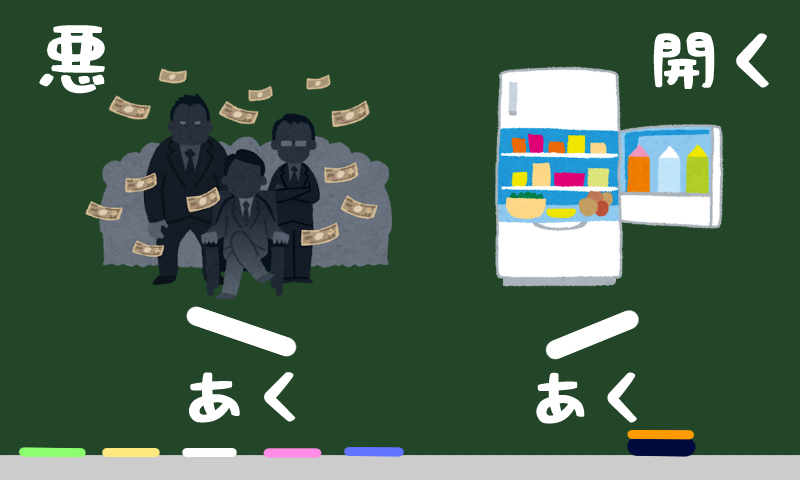
悪(evil) goes from high to low, and 開く(to open) goes from low to high.
Sentence
悪と正義
aku(-\) to seigi
Evil and justice
ドアが開く
doa ga aku(-/)
A door opens.
はし 橋(bridge) vs 端(edge) vs 箸(chopsticks)
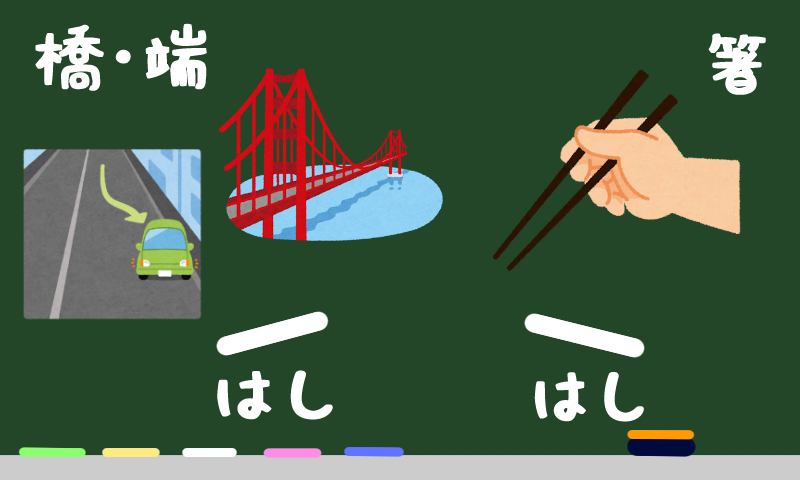
はし has three different meanings: 橋(bridge), 端(edge) and 箸(chopsticks). The pitch accent of 橋 and 端 are same. They go from low to high. But 箸 goes from high to low.
Sentence
橋を渡る
Hashi(-/) wo wataru
Cross a bridge.
道路の端に車を止める
Douro no hashi(-/) ni kuruma wo tomeru
Stop a car at the side (edge) of a road.
箸はとても便利
Hashi(-\) wa totemo benri
Chopsticks are really convenient.
くま 熊(bear) vs 隈(eye bag)
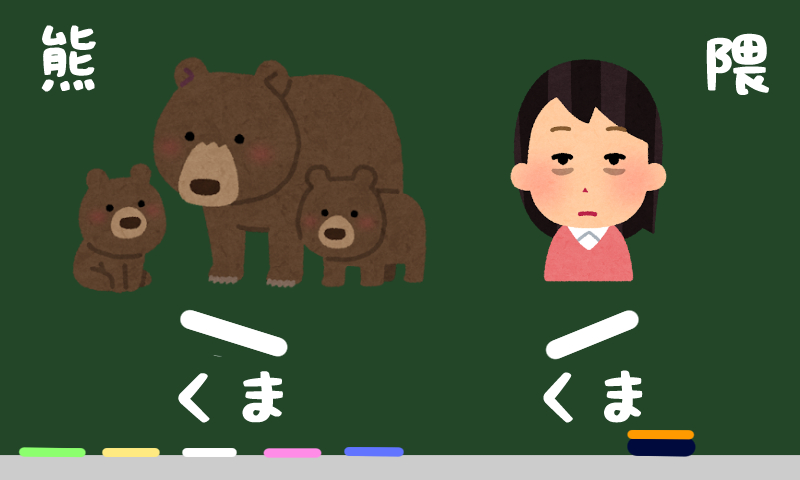
Bear(熊) and eye bag(隈) are same word in Japanese. 熊(bear) goes from high to low. 隈(eye bag) is the opposite of 熊(bear), it goes from low to high.
Sentence
熊の親子
Kuma(-\) no oyako.
Mother bear and baby bear.
夜更かしをして隈ができた
youkashi wo shite kuma(-/) ga dekita.
I stayed up late and got eyebags.
じょし 女子(girl) vs 助詞(particle)
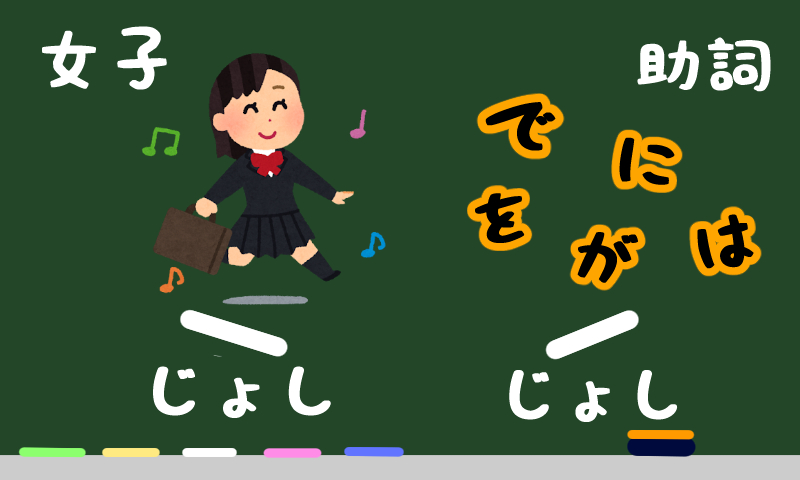
“Girl” is called 女子(joshi) in Japanese. But “particle,” like は or が, is also called 助詞(joshi). It makes you wonder why two completely different words come out from pitch accent!
女子 (girl) goes from high to low. 助詞(particle) goes from low to high.
Sentence
原宿系女子
harajukukei joshi(-/).
Harajuku style girl.
めんどくさい助詞
Medokusai joshi(-\).
Annoying particles.
Check out our article on how to say “such a hassle” in Japanese!
いえ 家(house) vs NO
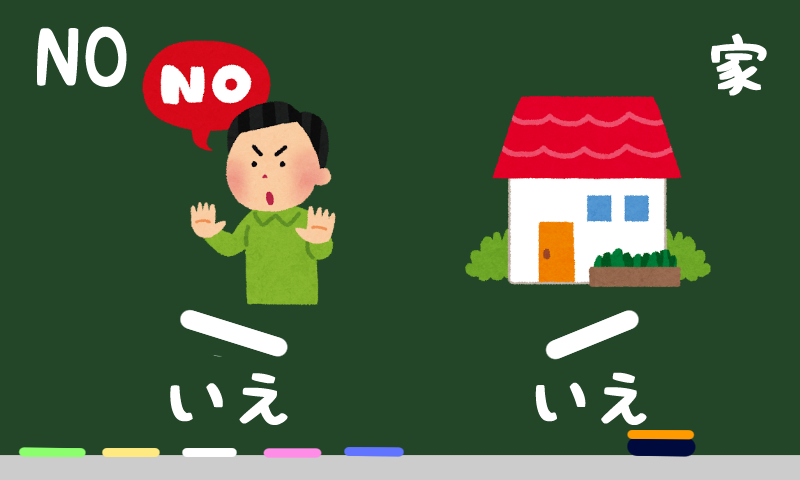
When you want to say “no” politely in Japanese, you say いえ(ie). いえ(ie) goes from high to low. House is also called ie(家) in Japanese. It goes from low to high.
Sentence
この家はいかがですか?
Kono ie(-/) ha ikaga desuka?
Do you like this house (Are you gonna buy this house)?
いえ。結構です。
Ie(-\). Kekkou desu.
No, I’m fine.
はい YES vs 肺(lung)
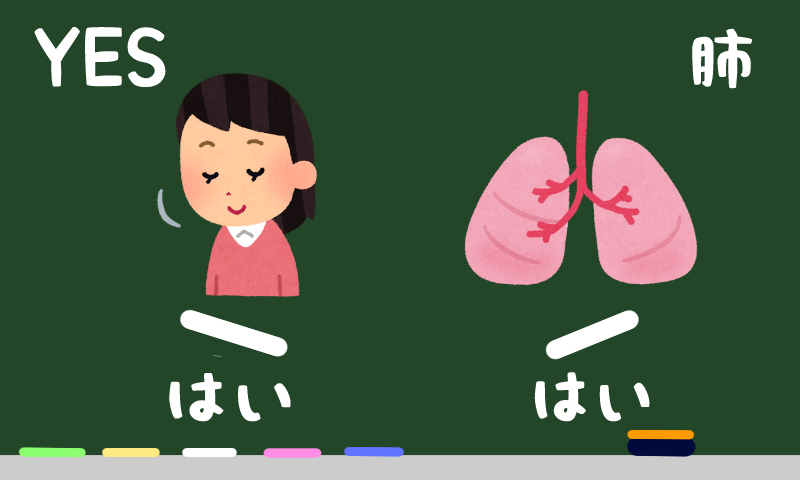
はい(yes) is the very first word to learn for Japanese learner. But if you pronounce はい(yes) with wrong accent, it’ll mean 肺(lung).
Will anybody ever think you’re shouting lungs at them instead of yes?
Probably not, but you need to know the difference between them. When you want to sayはい(yes), it goes from high to low. So it is like hai(-\). If you say hai(-/), it means lung (肺) in Japanese.
Sentence
はい。日本語は大変です。
Hai(-\). Nihongo ha taihen desu.
Yes. Japanese is hard.
たばこは肺に良くない
Tabako wa hai(-/) ni yokunai
Smoking is bad for your lungs.
にじ 虹(rainbow) vs 二時(2o’clock)
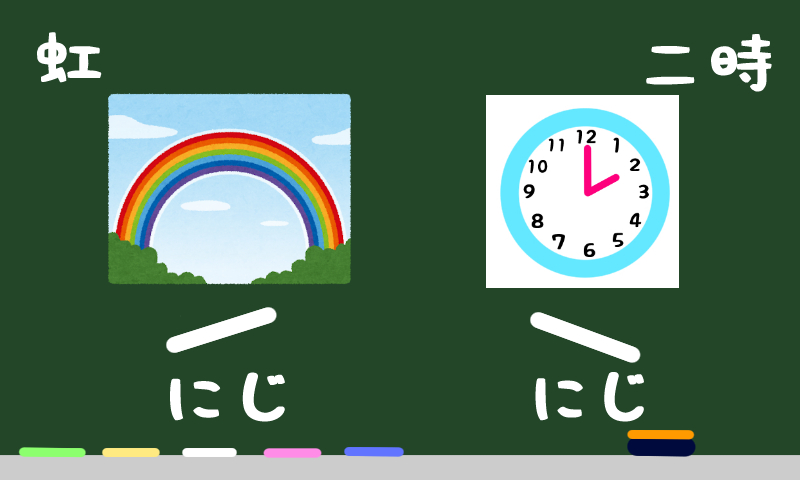
Niji has two meanings in Japanese. One is 2 o’clock and another one is rainbow. 2 o’clock niji goes from high to low. Rainbow is also called niji but it goes from low to high.
Sentence
二時に会おう
Niji(-\) ni aou.
虹がかかる
Niji(-/) ga kakaru.
There is a rainbow.
もも 桃(peach) vs 腿(thigh)
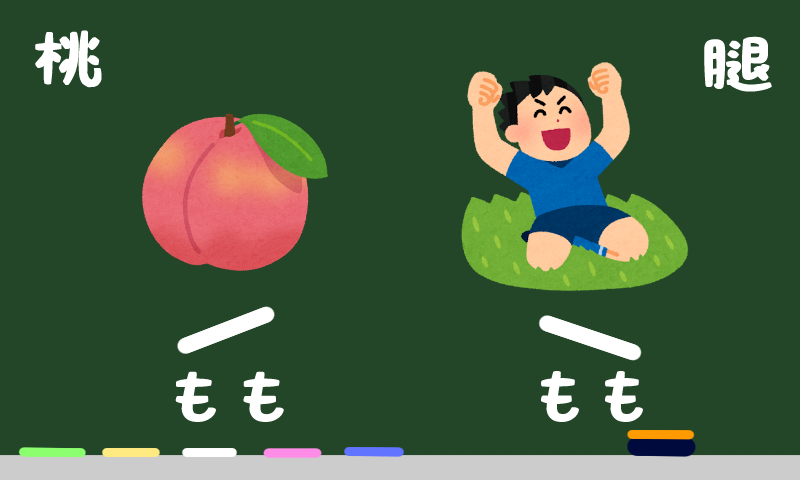
もも indicates two different meanings. When you want to say もも for peach, you go from low to high. So it’s like もも(-/). On the other hand, If you mean thigh, you say もも(-\).
Sentence
桃を食べたい。
Momo(-/) wo tabetai.
I want to eat a peach.
スクワットで腿が痛い。
Squat de momo(-\) ga itai.
My thighs hurt from squatting.
かき 柿 vs 牡蠣
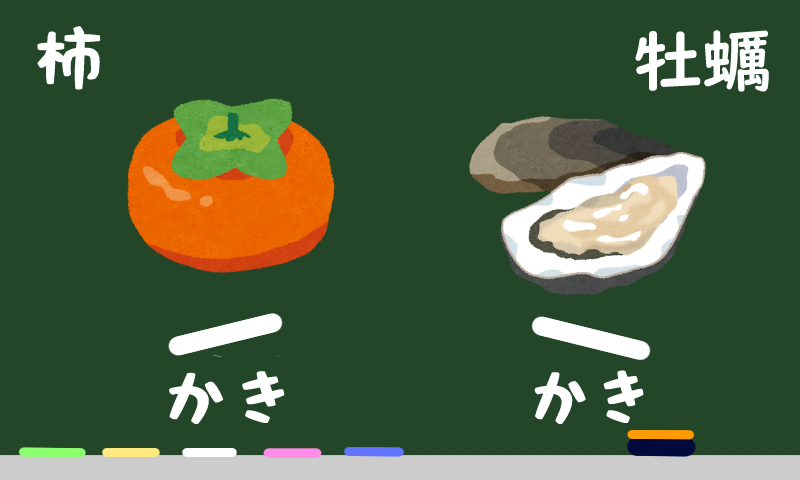
Do you like persimmon or oysters? If you want to say that you like persimmons, you go from low to high, like 柿 (-/). If you like oysters, you say 牡蠣(-\).
Sentence
柿が好き
Kaki(-/) ga suki.
I like persimmons.
牡蠣が好き
Kaki(-\) ga suki.
I like oysters.
すみ 隅(corner) vs 墨(ink)
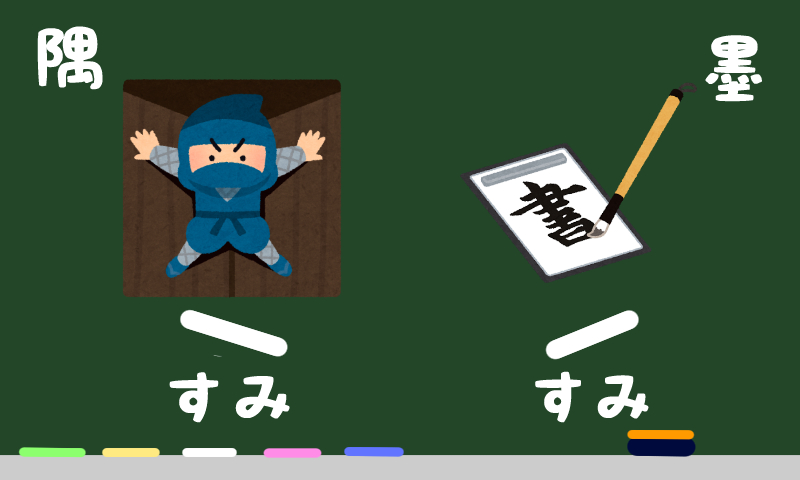
Sumi has two meanings, one is 隅(corner), another is 墨(ink).
It might be rare to hear those words in same situation but you need to know the difference. 隅(corner) goes from high to low. 墨(ink) goes from low to high.
Sentence
部屋の隅で引きこもる。
Heya no sumi(-/) de hikikomoru.
Go hide (and not come out) in a corner of the room.
墨をこぼす。
Sumi(-\) wo kobosu.
Spill ink.
Conclusion
Most Japanese people will understand you even if you have the wrong pitch accent, but it’s important to learn if you want to effectively communicate to Japanese people! It will sound better to their ears and bring you closer to native pronunciation😊